
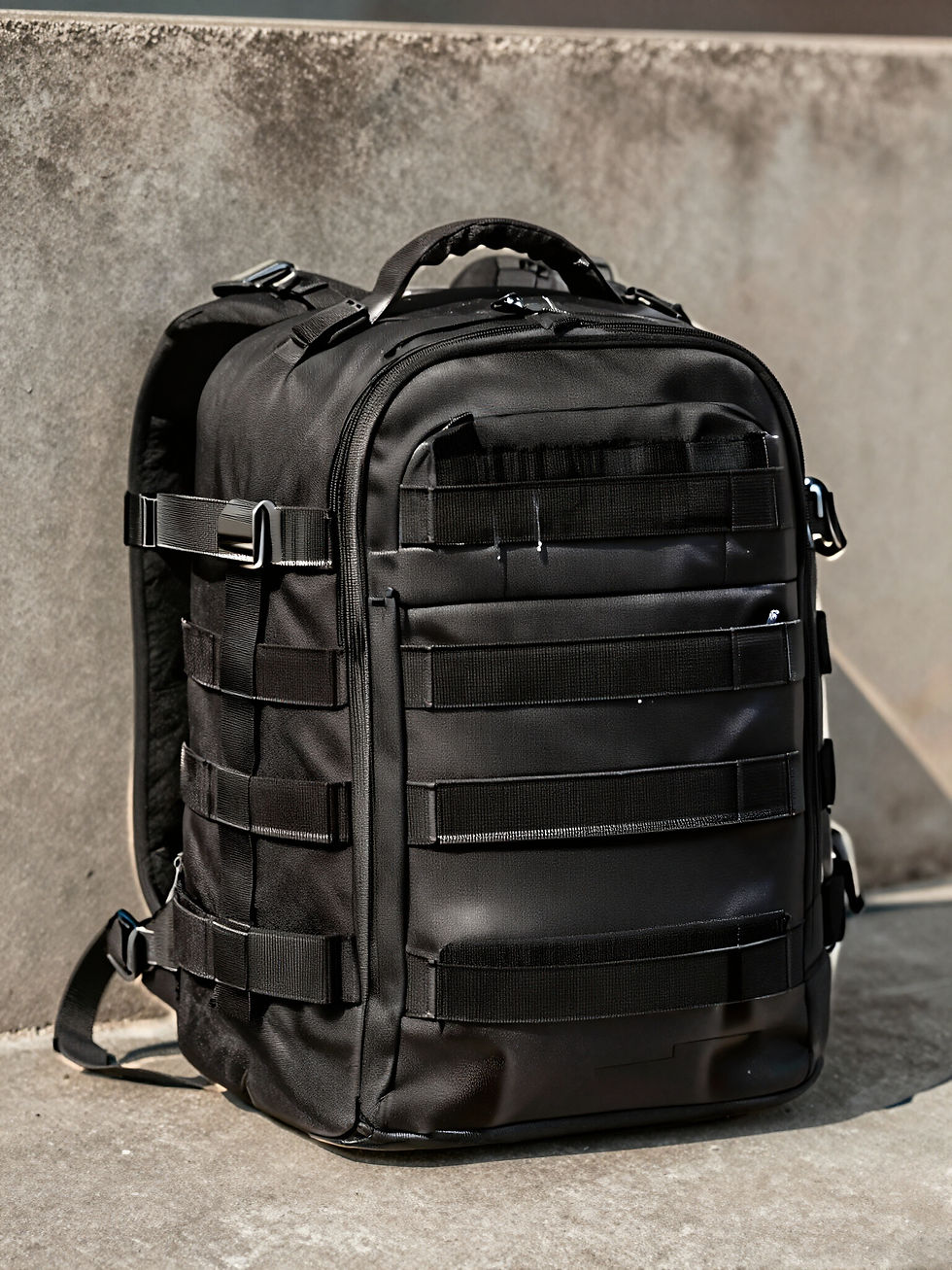
Pack Weight & Balance
How you place gear in your bug out bag matters as much as what you pack. Use these three zones to keep your load comfortable, balanced, and ready for long walks when every step counts.
Top of Pack
Light, bulky items that you may need during the day. Think: puffy jacket, rain gear, hat, gloves, small tarp, toilet kit. These fill space without adding strain to your shoulders.
Middle of Pack (Core Weight)
Heavy, dense items packed close to your spine. Think: water, food, cook kit, shelter system, tools. Keeping this weight centered and high helps your hips carry the load instead of your back.
Bottom of Pack
Light items you won’t need until camp. Think: sleeping bag, sleeping pad, extra base layers. These cushion the bottom of the pack and keep the heavy gear from sagging.

Bag Types

Everyday Carry (EDC) Bag
A small bag or pouch you carry daily with essentials like a knife, light, basic first aid, and key documents. It’s for short disruptions and everyday problems, not full evacuations.

72-Hour Bug Out Bag
A backpack designed to keep you alive and functional for about three days away from home. It focuses on water, food, shelter, clothing, and basic tools for short-term emergencies.

INCH Bag ("I'm Never Coming Home")
A larger, heavier pack built for long-term displacement when you may not return home. It carries more tools, clothing, and supplies for extended survival, but must still be manageable to carry.

Assembly Checklist
Use this checklist to make sure your bug out bag is complete and balanced:
- Choose the right bag type for your situation (EDC, 72-hour, or INCH).
- Pack heavy items in the middle of the pack, close to your spine.
- Place light, bulky items at the top and bottom to cushion the load.
- Balance weight left to right so the pack doesn’t pull to one side.
- Keep quick-access items (map, snacks, light, first aid) in outer pockets.
- Test-walk with your packed bag and adjust straps and weight as needed.

Supplies by Bag Type
Everyday Carry (EDC) Bag
• ID, cash, and key documents (copies)
• Headlamp
• Pocket knife or multi-tool
• Basic first aid (bandages, pain reliever, antiseptic wipes)
• Lighter or matches
• Phone charger/power bank
• Small water bottle
• Sewing kit
72-Hour Bug Out Bag
• Water (bottles or bladder)
• Purification method (filter, tablets, or drops)
• 3 days of compact, shelf-stable food
• Shelter: tarp
• Clothing: extra socks, base layers, rain gear, hat, gloves
• Fire: waterproof matches
• Tools: sturdy knife
• First aid kit
• Hygiene: toothbrush, paste, wipes, hand sanitizer, toilet kit
• Emergency blanket
• Duct tape
• Paracord
INCH Bag ("I’m Never Coming Home")
• All 72-hour bag items, plus extra food and water options
• Extra clothing sets for changing weather and long-term wear
• More durable shelter
(tent, bivy, better sleeping system)
• Expanded tools: saw
• Water collection gear (collapsible containers, additional filters)
• Long-term fire and cooking setup (stove, fuel, cookware)
• Navigation: maps, compass, backup navigation tools
• Extra batteries and power options (solar charger, spare bank)
Family Water Storage Examples
- 2 People - 730 gallons (Yearly survival target)
- 3 People - 1,095 gallons (Yearly survival target)
- 4 People - 1,460 gallons (Yearly survival target)
Family Food Supply Examples
- 2 People - 800 lbs of food (Yearly intake target)
- 3 People - 1,200 lbs of food (Yearly intake target)
- 4 People - 1,600 lbs of food (Yearly intake target)
Family Medical Kit Examples
- 2 People - 2 trauma kits / 365 daily medication sets
- 3 People - 3 trauma kits / 548 daily medication sets
- 4 People - 4 trauma kits / 730 daily medication sets
Family Loadout Examples
- 2 People - 40 lbs total gear weight
- 3 People - 60 lbs total gear weight
- 4 People - 80 lbs total gear weight